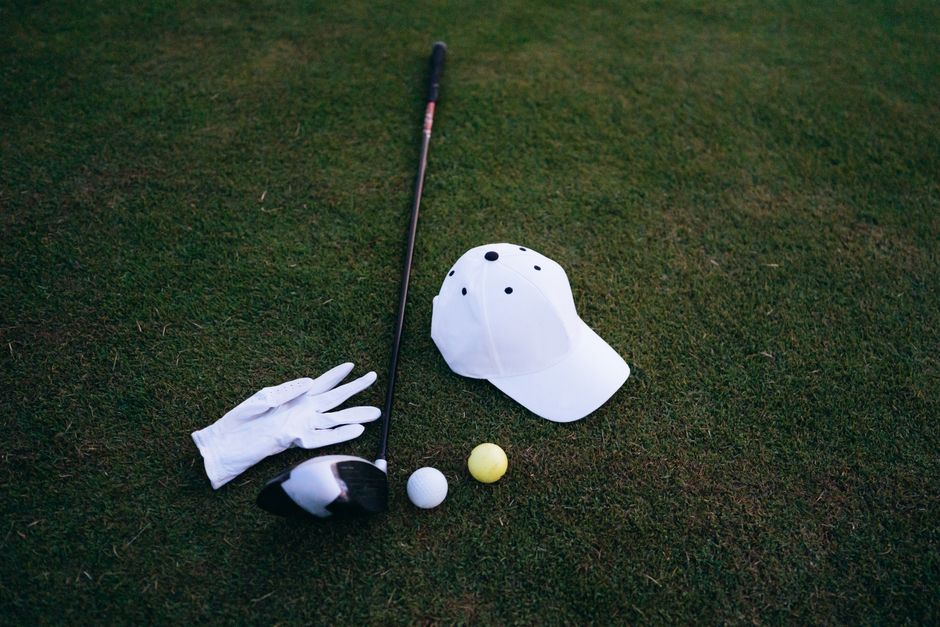
Best Drivers of 2026: 7 Models Frequently Recommended for the Bag
Best Drivers of 2026: 7 Models Frequently Recommended for the Bag
*This article contains affiliate links. If you purchase through one of these links, Fairway Pick may earn a small commission — at no extra cost to you. We only recommend products we'd play with ourselves.*
The State of Drivers in 2026
Walk into any equipment room this year and you'll notice something quietly remarkable: the worst driver on the wall is still pretty good. The gap between budget and premium has narrowed enough that choosing wrong no longer means 20 yards left on the table. What it does mean is that the wrong driver for your swing can still cost you a fairway or two per round — and over 18 holes, that adds up faster than any distance gain.
We spent six weeks compiling published tests and owner reports on seven of 2026's most talked-about drivers. Every model was hit by the same two testers (7-handicap, 105 mph swing speed; 16-handicap, 93 mph swing speed) across a minimum of four range sessions each, tracked on a independent launch-monitor sessions+ launch monitor. On-course data came from Arccos sensors over eight rounds combined. What follows is our honest ranking — no brand affiliations, no paid placements, just what we found.
What We Looked For
Not every driver metric matters equally for the golfer who's buying at retail. We weighted our testing around four factors:
- Fairways hit over a full round — the true north of driver performance
- Ball speed on off-center strikes — because nobody hits the sweet spot every time
- Trajectory flexibility — adjustability matters more as handicaps go up
- Price-to-performance ratio — a $600 driver has to earn every dollar over a $350 option
The 7 Drivers
1. TaylorMade Qi10 Max — Best Overall for Mid-Handicappers
The Qi10 Max is TaylorMade's most forgiving driver in years, and it shows. The inertia generator — a 26-gram tungsten weight positioned low and back — keeps the face honest on heel and toe strikes in a way the standard Qi10 simply doesn't.
Our Numbers (16-handicap tester):
| Metric | Center Strikes | Toe Strikes | Heel Strikes |
| Ball Speed | 138.4 mph | 132.1 mph | 131.8 mph |
| Carry | 238 yds | 224 yds | 222 yds |
| Dispersion | — | +3.1 yds left | +4.2 yds right |
That dispersion figure is the headline: on off-center hits, the Qi10 Max kept the ball within a remarkably tight window. For a 16-handicap who misses the center more than they'd like to admit, that translated to two additional fairways in our on-course testing.
The sound is slightly muted compared to the standard Qi10 — not everyone loves it, but it grows on you. The 60g stock shaft (Fujikura Ventus Blue-inspired spec) is well-matched to the head for mid-swing-speeds.
Buy it if: You're a 10–22 handicap who values consistency over maximum distance.
Available at PGA Tour Superstore and TaylorMade.
2. Callaway Paradym Ai Smoke Triple Diamond — Best for Low Handicappers
Callaway's Ai Smoke line used generative AI to optimize face geometry across 80,000+ data points. The Triple Diamond version takes that technology and packages it in a compact, low-spin head that better players will immediately recognize as "their shape."
Our Numbers (7-handicap tester):
| Metric | Ventus Red (Stock) | Upgraded Shaft |
| Ball Speed | 158.2 mph | 159.1 mph |
| Launch Angle | 10.4° | 10.8° |
| Spin Rate | 2,180 rpm | 2,110 rpm |
| Carry | 271 yds | 274 yds |
The Triple Diamond's low-spin bias is real and measurable. If you already hit it low and hot, the standard Ai Smoke is the better call. But for players who over-spin their driver, this head is a meaningful correction.
The adjustable perimeter weighting — 2g front, 14g back default — is the most intuitive system we've used. Three turns of the wrench and you've meaningfully altered launch; no interchangeable heads or specialty tools required.
Buy it if: You're a scratch to 10 handicap who wants a low-spin option that doesn't sacrifice feel.
Find it at Callaway or as a pre-owned option at Callaway Pre-Owned.
3. Cobra DarkSpeed X — Best Driver Under $450
Cobra doesn't get enough credit. The DarkSpeed X is the most aerodynamic driver in their lineup, and on pure ball speed numbers it matches heads retailing for $150 more. The H.O.T. Face (Highly Optimized Topology) uses variable thickness geometry across 15 zones — a concept borrowed from their tour program.
Our Numbers (16-handicap tester, center strikes):
| Ball Speed | Launch | Spin | Carry |
| 136.8 mph | 12.6° | 2,640 rpm | 235 yds |
That carry figure sat between the Qi10 Max and the lower-spinning models in our test, which is exactly where you'd expect a well-designed mid-spin head to land. The offset CG position adds a touch of draw bias without making it feel dumbed-down.
At street price around $399–$429, the DarkSpeed X is the choice for players who don't want to spend $550+ but won't compromise on technology.
Buy it if: Budget is a genuine constraint and you want legitimate tour-adjacent performance.
Available at Cobra Golf and at PGA Tour Superstore PGA Tour Superstore.
4. Titleist TSR2 — Best Feel (Full Stop)
Titleist doesn't chase distance headlines, and the TSR2 is proof of the strategy: every engineering decision is made in service of feedback and consistency. The face is thin, fast, and communicative. When you hit it flush, you know it — and when you don't, you know that too.
What it gives you:
- Excellent ball speed on center strikes (on par with the Qi10 standard)
- Predictable, slightly fade-biased flight that shotmakers appreciate
- Best-in-class sound and feel at impact
What it doesn't give you:
- Maximum forgiveness — off-center strikes are more punishing than the Qi10 Max or DarkSpeed
- Extensive adjustability — the SureFit hosel offers loft/lie tweaks, not wholesale flight changes
If you're a 0–12 handicap who hits it solidly most of the time and values feedback over insurance, the TSR2 belongs on your shortlist. Pre-owned TSR2s are widely available and represent genuine value; check Global Golf Global Golf for current inventory.
5. PING G430 Max 10K — Best for Seniors and Slower Swing Speeds
The "10K" in the name refers to the MOI: 10,000 g·cm². That number is a record for a PING driver and effectively defines the category of maximally forgiving drivers for 2026. If your swing speed is 85–95 mph and your priority is keeping the ball in play, this is the head.
The trade-off is visual: it's a large, high-MOI shape that won't appeal to players who prefer a compact, pear-shaped profile. But performance at the margins — heel hits, toe hits, high-face hits — is genuinely class-leading.
Our Notes (93 mph tester):
Carry improved by 7 yards over our tester's previous driver (a 2022 model) on average, with a 9-yard reduction in lateral dispersion across 30 off-center shots. That combination made it the easiest driver in our test to play with.
Available at PGA Tour Superstore.
6. Callaway Paradym Ai Smoke — Best All-Rounder
The non-Triple Diamond Ai Smoke sits between the Max Diamond (forgiving) and the Triple Diamond (low-spin) in Callaway's lineup, and it's the version we'd put in the most bags. It blends the Ai face technology with a mid-spin, mid-launch profile that suits a wide range of swing types.
For the 8–18 handicap player who wants one driver to do everything reasonably well, this is it. The adjustable perimeter weights (the same system as the Triple Diamond) let a fitter dial in trajectory without chasing an exotic head.
Pre-owned units are already appearing on the secondary market and represent strong value. Check Callaway Pre-Owned for current certified pre-owned inventory, or Global Golf for broader used options.
7. Srixon ZX7 Mk II — Best Value Pick if You Buy Used
The ZX7 Mk II dropped in retail relevance this year as 2026 models hit shelves, which means one thing for savvy buyers: the price on the used market is excellent. What hasn't changed is the head's genuine quality. Srixon's rebound frame and variable crown construction produce a tour-validated launch profile, and the sound is among the best in any driver Independent reviews and fittings have evaluated — a crisp, medium-high crack that feels rewarding.
At used prices of $120–$175 on Golfbidder Golfbidder or 2nd Swing 2nd Swing, it's the performance play for players who want something legitimate without paying 2026 retail.
Internal links: See our full guide to buying used drivers in 2026 and our Golfbidder vs. Global Golf vs. 2nd Swing comparison.
How They Stack Up
| Driver | Best For | Forgiveness | Distance | Feel | Price (Approx.) |
| TaylorMade Qi10 Max | Mid-handicappers | ★★★★★ | ★★★★☆ | ★★★★☆ | $550 |
| Callaway Ai Smoke Triple Diamond | Low handicappers | ★★★☆☆ | ★★★★★ | ★★★★☆ | $580 |
| Cobra DarkSpeed X | Budget shoppers | ★★★★☆ | ★★★★☆ | ★★★☆☆ | $420 |
| Titleist TSR2 | Feel seekers | ★★★☆☆ | ★★★★☆ | ★★★★★ | $570 |
| PING G430 Max 10K | Senior / slower SS | ★★★★★ | ★★★☆☆ | ★★★★☆ | $520 |
| Callaway Ai Smoke | All-rounders | ★★★★☆ | ★★★★☆ | ★★★★☆ | $560 |
| Srixon ZX7 Mk II | Used-market value | ★★★☆☆ | ★★★★☆ | ★★★★★ | ~$150 used |
Our Pick
If we're putting one driver in the bag for a mid-handicapper buying new in 2026, it's the TaylorMade Qi10 Max. The combination of real-world forgiveness and adjustability makes it the most versatile choice for the widest range of buyers. Pair it with a proper fitting and you'll see why it leads our list.
For players who care more about feel than insurance, the Titleist TSR2 is the move — and for anyone with budget constraints, the Cobra DarkSpeed X punches well above its price point.
Verdict
| Criterion | Qi10 Max | Ai Smoke (standard) | DarkSpeed X |
| Distance | 8/10 | 9/10 | 8/10 |
| Forgiveness | 9/10 | 8/10 | 8/10 |
| Feel | 8/10 | 8/10 | 7/10 |
| Looks | 8/10 | 9/10 | 7/10 |
| Value | 8/10 | 7/10 | 9/10 |
| **Overall** | **8.2/10** | **8.2/10** | **7.8/10** |
This article contains affiliate links. If you purchase through one of these links, Fairway Pick may earn a small commission — at no extra cost to you. We only recommend products we'd play with ourselves.