How to Organize a Golf Bag: Club Order, Pockets, and Weight
Fairway Pick may earn a commission from qualifying purchases at no extra cost to you. This guide is based on practical organization, not a claim that one layout improves scoring.
Quick answer: organize a golf bag so clubs are visible, weight is balanced, and the items you use most are reachable without unloading everything. Put longer clubs where they will not cover shorter clubs, group irons in a repeatable sequence, isolate the putter if the bag provides a suitable well, and reserve separate pockets for balls, valuables, clothing, hydration, and wet or dirty accessories.
Start with an empty bag
Take everything out before rearranging it. Old scorecards, broken tees, loose wrappers, duplicate tools, and forgotten rain gear create more clutter than most golfers realize. Wipe the dividers and vacuum or shake debris from the pockets according to the bag maker’s care instructions.
Lay out every club and accessory. Sort the non-club items into five groups: play, weather, personal, food and drink, and maintenance. This makes it easier to see duplicates and decide what deserves permanent space.
Check the club limit first
The Rules of Golf limit a player to 14 clubs during a round. You may carry fewer. Count the actual clubs before leaving home, especially after practice sessions or equipment testing. A training aid or alignment stick is not automatically a club, but do not assume every object is permitted for every use during a round; consult the current Rules of Golf or a competition official when it matters.
Organization should make the count obvious. If every club has a predictable location, an extra or missing club stands out immediately.
Choose a club order that matches the bag
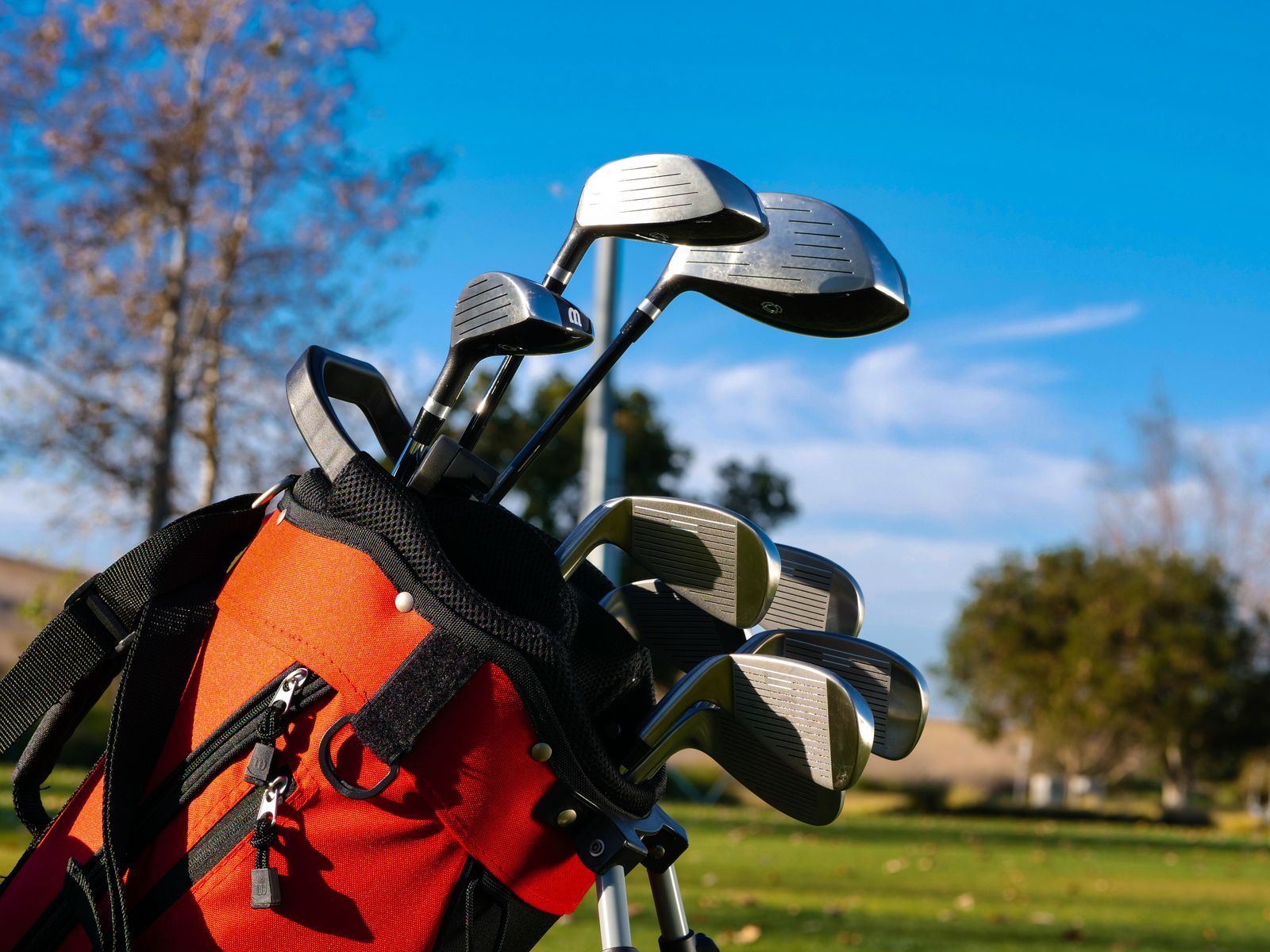
There is no universal top-to-bottom order because stand bags, cart bags, and trolley bags sit at different angles. The useful rule is visibility: when the bag is in its normal playing position, longer clubs should not hide shorter ones.
- Stand bag: place driver, fairway woods, and hybrids in the upper section nearest the shoulder straps. Put mid-irons in the middle and short irons and wedges lower. This usually keeps clubheads layered rather than piled.
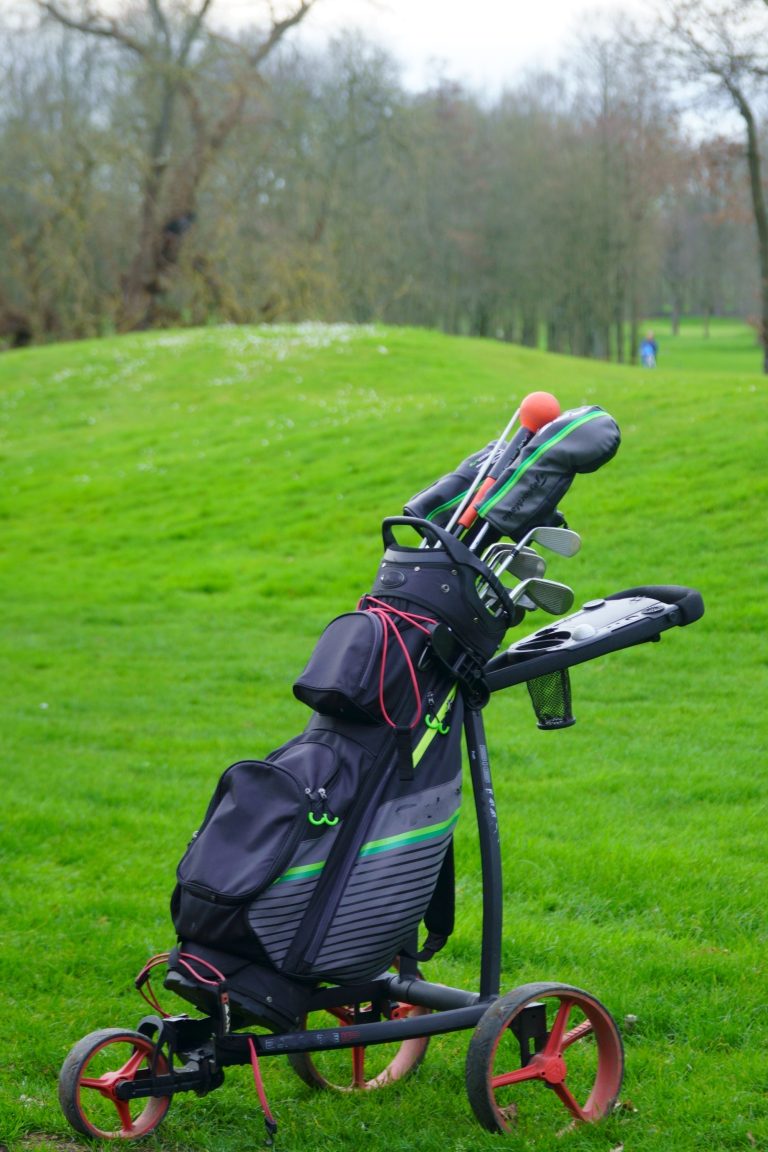
- Cart or trolley bag: orient the bag as it will face on the cart. Put tall clubs at the rear, away from the accessible pocket side, so wedges and the putter remain easy to reach.
- 14-way top: assign a consistent slot to each club. The exact sequence matters less than returning every club to the same place.
- Four- or five-way top: group woods, long/mid irons, short irons, and wedges. Avoid crowding one opening with too many large grips.
Oversize putter grips can catch in narrow dividers. Use the dedicated putter well only if the grip moves freely; forcing it can damage both the grip and divider fabric.
A simple repeatable club map
| Bag zone | Typical contents | Reason |
|---|---|---|
| Highest/rear | Driver, fairway woods, hybrids | Tall clubs stay visible without covering irons |
| Middle | Long and mid-irons | Easy to scan in numerical order |
| Lowest/front | Short irons and wedges | Frequent approach clubs remain accessible |
| Putter well | Putter, if compatible | Protects the grip and speeds retrieval |
Left-to-right ordering is personal. Some players prefer ascending numbers; others mirror the way they select clubs while standing beside the bag. Pick one map and keep it for several rounds before deciding it does not work.
Balance the weight
A carry bag should not feel as if it twists toward one side. Place dense items—balls, a full bottle, batteries, or a rangefinder—near the central spine and distribute them across both sides. Bulky but light clothing can fill an outer pocket without pulling the bag off balance.
Adjust both straps while wearing normal golf clothing. The bag should sit securely without striking the lower back or hanging so low that clubs shift with every step. Follow the manufacturer’s strap-adjustment directions, since harness designs vary.
For cart bags, balance is still useful. Concentrated weight can make the bag rotate in the strap or place frequently used pockets against the cart. Test access after fastening the bag rather than assuming the showroom orientation will remain unchanged.
Give each pocket one job
- Ball pocket: carry a realistic supply, not every spare ball you own. Add a small separate pouch for tees, pitch-mark tools, and ball markers.
- Valuables pocket: use the lined or water-resistant pocket for a phone, keys, and wallet. Keep sunscreen and drinks elsewhere in case they leak.
- Apparel pocket: fold a light layer and rain shell so either can be removed without emptying the compartment.
- Insulated pocket: use only for food or drink that fits securely. Remove waste after every round.
- Accessory pocket: store a rangefinder, spare glove, pencil, and compact first-aid items in smaller organizers.
- Wet/dirty zone: isolate damp gloves and towels in a ventilated external position or temporary waterproof pouch, then remove them at home.
Do not bury emergency items. If lightning, sudden cold, or heavy rain is possible, a shell and necessary medication should be reachable quickly.
Keep liquids away from electronics
A bottle cap, sunscreen tube, or cooling towel can leak. Give liquids a separate upright pocket and close each container before loading it. Rangefinders, phones, power banks, and car keys belong in another compartment, ideally in a protective pouch.
“Water-resistant” does not mean waterproof. Use an internal dry bag for items that cannot get wet, and use the bag’s rain hood to protect club openings during rain. Dry the entire setup promptly after the round.
Build a small on-course essentials kit
A compact zip pouch prevents tiny items from migrating to the bottom of a large pocket. Useful contents include a few tees in the sizes you play, a pitch-mark repair tool, two ball markers, a pencil, a spare glove, bandages, and any personal medication. Check local course rules before packing insect spray, aerosol products, or other restricted items.
Attach a towel where it will not drag or wrap around cart wheels. A brush should have a secure cover or position so wet bristles do not soil clothing and grips.
What to remove
Extra weight accumulates gradually. Remove damaged balls you will not play, expired snacks, empty packaging, extra sleeves of tees, multiple heavy training aids, and clothing that does not match the forecast. Keep practice-only equipment in a separate tote so it does not travel through every round.
Do not remove safety essentials merely to make a number on a scale smaller. Water, sun protection, required medication, and weather layers take priority over cosmetic weight savings.
Weekly reset checklist
- Count clubs and return each to its assigned slot.
- Restock only the balls and tees likely to be used.
- Recharge or replace batteries in electronic devices.
- Remove food, trash, damp towels, and wet gloves.
- Check the weather and swap layers accordingly.
- Inspect zippers, straps, stand legs, and cart-strap channels.
- Confirm valuables were removed after the previous round.
Common organization mistakes
- Putting tall clubs where they cover wedges and the putter
- Loading all balls and electronics into one side pocket
- Storing wet gloves in a closed valuables compartment
- Filling every divider because empty space feels wasteful
- Leaving practice clubs in the bag before a competitive round
- Testing pocket access before, but not after, strapping the bag to a cart
FAQ
Should clubs be arranged by number? It is a useful default because missing clubs become obvious, but any consistent system that keeps clubs visible can work.
How many golf balls should I carry? Carry enough for your usual play and course difficulty, plus a reasonable margin. Large reserves add weight and are rarely necessary.
Where should wedges go? Usually in the lowest or most accessible section, separated enough that their heads and grips do not tangle.
Can I wash a golf bag? Follow its care label. Spot cleaning is safer than soaking for many bags because internal panels, adhesives, and coatings may not tolerate immersion.
Sources
- USGA, Equipment Rules and Rule 4: The Player’s Equipment — https://www.usga.org/equipment-standards/equipment-rules-2019/equipment-rules.html
- The R&A, Rules of Golf — https://www.randa.org/rog/the-rules-of-golf