
What Golf Clubs Does a Beginner Actually Need? A Starter Guide
What Golf Clubs Does a Beginner Actually Need? A Starter Guide
This article contains affiliate links. Fairway Pick may earn a commission at no extra cost to you.
Here’s the number that should change how you shop: the USGA allows you to carry 14 clubs, but most beginners would score better with 9 or 10. I’ve watched too many new golfers haul a full bag of mismatched clubs to the first tee, only to whiff a 3-iron they have no business swinging. The truth about golf clubs for beginners is that you need fewer clubs, not more — and you definitely don’t need to spend $2,000 to break 100.
I’m a 6-handicap who has tested gear for years and re-gripped more garage-sale sets than I’d like to admit. This guide cuts through the marketing so you know exactly what to buy, what to skip, and whether used or new makes sense for your wallet.
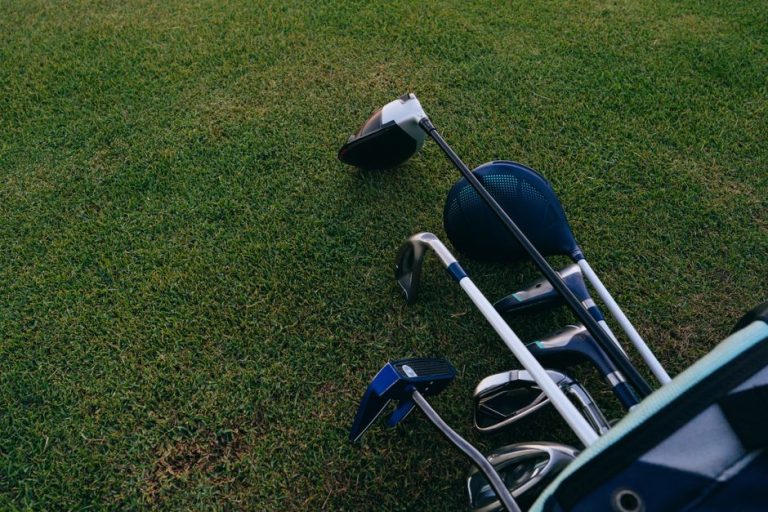
Quick Answer: A beginner needs a driver, a fairway wood or hybrid, an iron set from 6-iron through pitching wedge, a sand wedge, and a putter — about 9–10 clubs total. Buy a used or pre-owned set to save 40–60% while you’re still developing a swing. Expect to spend $350–$600 used versus $900–$1,400 new. Skip the 3-iron, the 60° lob wedge, and any “blade” irons until you’re consistently breaking 90.
The Clubs You Actually Need
Let’s build the bag from the ground up. For a golfer in the 10–25 handicap range, the goal is forgiveness and simplicity — clubs that help on mishits, which is most shots when you’re learning.
Driver (10.5°–12° loft). More loft is your friend. Higher loft launches the ball easier and reduces side-spin, so your slice doesn’t fly two fairways over. Avoid anything under 10.5°.
One fairway wood OR hybrid. You need a club to cover 180–210 yards off the deck. A 5-wood (18°) or a 4-hybrid (22°) is far easier to hit than a 3-wood. Pick one, not both, when you’re starting.
Iron set: 6-iron through pitching wedge. This is your scoring core. Modern game-improvement irons with wide soles and perimeter weighting are dramatically more forgiving than the long irons of a decade ago. The 6-PW range covers roughly 110–160 yards for most players.
Sand wedge (54°–56°). Essential for greenside bunkers and short pitches. Most iron sets stop at the pitching wedge (~46°), leaving a gap you’ll fill with this one wedge.
Putter. You’ll use it on nearly every hole — about 40% of your strokes happen on the green. A mallet-style putter with alignment lines is the most forgiving choice for beginners.
That’s 9 clubs. Add a gap wedge (50°) or a second hybrid once you’re comfortable, and you’re at 10–11.
What to Skip (Seriously, Skip These)
- The 3-iron and 4-iron. Tour pros barely carry these anymore. The launch is too low and the margin for error is razor-thin. Replace them with hybrids.
- Blade / muscle-back irons. They look gorgeous and punish every mishit. Not for you yet. Stick with cavity-back game-improvement irons.
- A 60° lob wedge. It’s the hardest club in the bag to control. The 54°–56° sand wedge does 90% of what you need.
- A 3-wood off the tee if your driver scares you — but you still don’t need both a 3-wood and 5-wood early on.
- Premium “Tour” balls at $50/dozen. Play a $25 ball or used balls until you stop losing six per round.
Used vs. New: Where the Smart Money Goes
This is the single biggest decision, and for most beginners I lean used. Here’s why: your swing is going to change a lot over your first two seasons. The clubs that fit you today may not fit you in 18 months once you stop coming over the top. Paying full retail for gear you’ll outgrow is a poor bet.
The pre-owned market in 2026 is excellent. Sites like [GLOBALGOLF] and [2NDSWING] grade every club’s condition and let you filter by handicap-appropriate models. You can pick up a 2–3 year old game-improvement iron set in “Very Good” condition for roughly half its original price — and the technology gap between a 2023 and 2026 game-improvement iron is honestly minimal.
When new makes sense: if you want a custom fitting (shaft length, lie angle, grip size), a fitting at [PGATSS] paired with a current-model boxed set can be worth it — especially if you’re tall, short, or have wrist issues. A proper fitting can be the difference between a slice and a draw.
| Buying Path | Typical 2026 Cost | Pros | Cons | Best For |
|---|---|---|---|---|
| Used full set (driver, wood, irons, wedge, putter) | $350–$600 | Cheapest entry; great value; low risk if you quit | No fitting; cosmetic wear; limited stock | Brand-new players unsure they’ll stick with it |
| Pre-owned mix-and-match | $500–$800 | Get specific forgiving models; better resale | Takes research; condition varies | Improving 15–25 handicaps who know what they want |
| New boxed beginner set | $400–$700 | Matched look; warranty; bag included | Cheaper components; you’ll outgrow it | Casual golfers who want simple & new |
| New + custom fitting | $1,100–$1,600 | Dialed to your body & swing | Expensive; overkill if swing still changing | Committed 10–15 handicaps ready to invest |
Specific Models Worth Hunting For (Used)
Here are real clubs I’d happily recommend to a friend, all widely available pre-owned:
Irons: The Callaway Rogue ST Max, TaylorMade Stealth, and Cobra Air-X are all forgiveness machines. A used 6-PW set typically runs $350–$500 at [2NDSWING] versus $900+ new. The Cobra Air-X is especially light and easy to launch — great for slower swing speeds (under 90 mph driver).
Driver: A used Ping G430 Max or TaylorMade Stealth 2 in 10.5° goes for $200–$280 pre-owned, down from $450–$600 new. The Ping G-series is about as forgiving as drivers get.
Hybrid: A Callaway Apex or Rogue hybrid (22°) used is $70–$110 at [GLOBALGOLF].
Wedge: A Cleveland CBX sand wedge (54° or 56°) is the most forgiving wedge made — about $60–$90 used. The cavity-back design helps on chunked chips, your most common short-game mistake.
Putter: Don’t overthink it. A used Odyssey White Hot mallet runs $70–$120 and rolls beautifully.
Build that bag and you’re around $450–$600 all-in — a setup that will carry a 25-handicap all the way down to single digits.
Don’t Forget the Cheap Stuff That Matters
A few non-club items punch above their price:
- Glove ($18–$25): Replace it when it gets slick. A worn glove costs you grip pressure and accuracy.
- A rangefinder or GPS app: A free phone app is fine to start. Knowing you have 145 yards instead of guessing saves strokes immediately.
- Comfortable spikeless shoes ($80–$120): You walk 4+ miles a round. Bad shoes ruin the back nine.
- A dozen mid-priced balls: The Callaway SuperSoft or Titleist TruFeel at ~$25 give you plenty of performance without the premium-ball price.
A Realistic First-Season Budget
For a 10–25 handicap golfer who’s serious about improving, here’s what I’d actually spend:
- Used irons (6-PW): $400
- Used driver: $240
- Used hybrid: $90
- Used sand wedge: $75
- Used putter: $95
- Glove + a dozen balls: $45
Total: roughly $945 — and you could trim that to $650 by going slightly older on the irons and driver. Compare that to a new fitted setup at $1,400+ and you can see why pre-owned is the savvy beginner’s move.
The One Upgrade Worth Paying For
If you have any budget flexibility, spend it on a lesson or two, not more clubs. A $60–$100 lesson with a PGA pro will improve your scores more than any club purchase. I’ve never seen a beginner buy their way to a better swing — but I’ve seen plenty fix a slice in three sessions.
Bottom Line
Buy a used or pre-owned 9-club set: a 10.5°+ driver, one fairway wood or hybrid, game-improvement irons from 6-iron to pitching wedge, a 54°–56° cavity-back sand wedge, and a forgiving mallet putter. Expect to spend $450–$600 sourced from a graded retailer like [GLOBALGOLF] or [2NDSWING], where condition is verified and the value is unbeatable while your swing is still developing.
Skip the long irons, the lob wedge, and the blades. If you’re tall, short, or already committed to the game, get fitted at [PGATSS] before buying — but for the vast majority of beginners, smart used gear plus a couple of lessons is the fastest, cheapest path from shooting 100 to shooting 85. The best golf clubs for beginners aren’t the most expensive ones — they’re the forgiving ones that fit your budget and let you actually enjoy learning the game.