Buying Pre-Owned Irons on Golfbidder: What to Look For
Buying Pre-Owned Irons on Golfbidder: What to Look For
*This article contains affiliate links. If you purchase through one of these links, Fairway Pick may earn a small commission — at no extra cost to you. We only recommend products we'd play with ourselves.*
Why Irons Are the Best Category to Buy Used
Drivers lose their novelty quickly — new face technology every two years means there's a genuine performance case for upgrading. Irons don't work that way. A well-maintained 2020 forged iron set plays within 5% of a 2026 equivalent in every measurable category. The grooves wear over time — an important caveat — but the structural performance of the club is durable. This makes the used iron market the single best value opportunity in golf equipment.
Golfbidder Golfbidder has built a reputation as one of the most trustworthy used platforms for irons specifically. Their grading is strict, their photography shows actual wear, and their return policy is clear. Here's how to use the platform intelligently.
Understanding Golfbidder's Grading System
Golfbidder grades every club on a 1–5 scale. For irons, the critical grades are:
| Grade | Golfbidder Description | What to Expect on Irons |
| 5 — Excellent | Virtually unused, like-new condition | Minimal face wear; clean grooves; grips may still be factory |
| 4 — Good | Light use, minor cosmetic marks | Light face scuffing; grooves fully intact; grip functional but not new |
| 3 — Average | Normal use wear | Moderate face wear; grooves may show some rounding near outer edges; grip replacement likely needed |
| 2 — Below Average | Heavy use or cosmetic damage | Significant face wear; performance may be affected on wedges specifically |
| 1 — Poor | Functional but heavily worn | Not recommended for irons where groove performance matters |
Our recommendation: Buy Grade 4 or better for any iron set you intend to game. Grade 5 is worth the modest premium for irons from the last three years. Grade 3 can be acceptable for older sets where you're buying primarily for the head performance and plan to regrip and clean anyway.
What to Look For in the Photos
Golfbidder photographs the actual item — not stock images. When evaluating an iron listing, check:
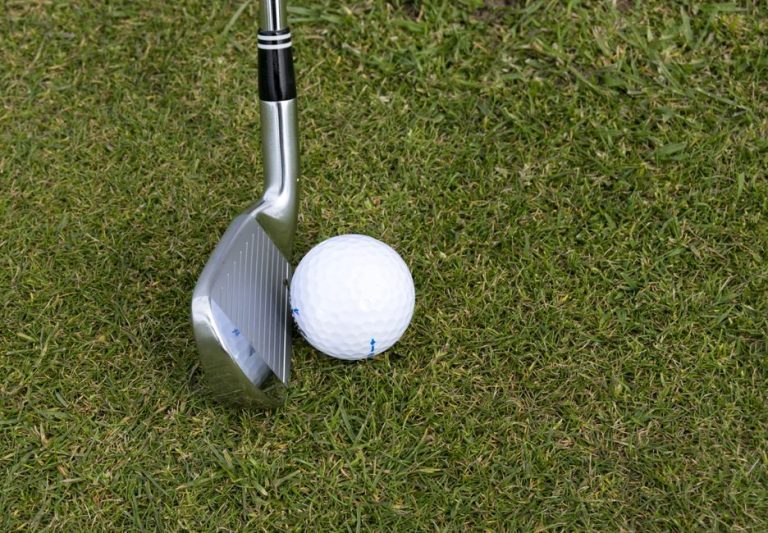
1. Face center wear: A polished oval on the face center indicates the club has been hit frequently. This is cosmetic for the body of the iron but can indicate groove wear. Ask for close-up photos if not provided.
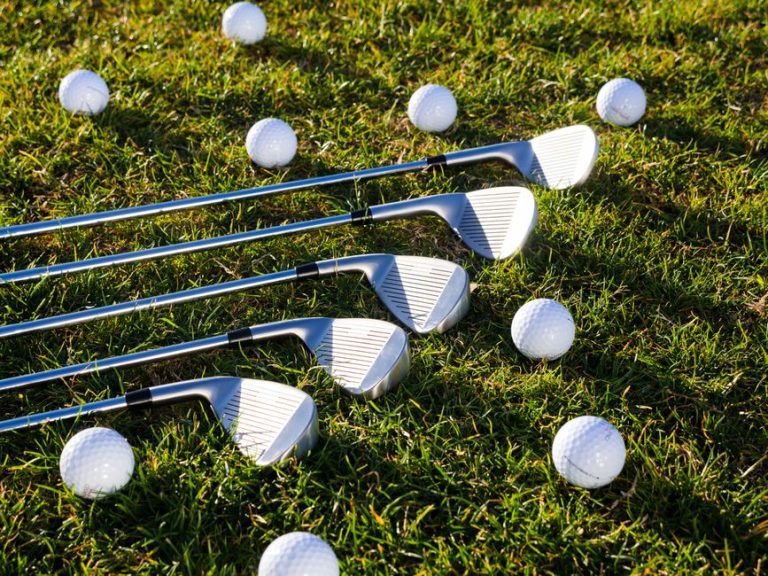
2. Grooves on short irons and wedges: The 8-iron through PW carry the most short-game work. Sharp, square groove corners retain spin. Rounded grooves reduce spin, particularly on shots from rough. The USGA groove rules changed in 2010 — any wedge bought used will have conforming grooves, but wear degrades their performance.
3. Hosel condition: Check for paint chips or micro-cracks near the hosel. These are usually cosmetic but worth noting.
4. Shaft condition: Look for any visible bends, kinks, or spiral marks. A hairline crack near the hosel is disqualifying.
Best Iron Sets to Buy Used in 2026
Here are the sets that offer the strongest value on Golfbidder's platform right now:
TaylorMade P790 (2021 or 2023 Edition)
The P790 has been the benchmark players' distance iron for three years. The 2021 and 2023 versions are functionally near-identical to the 2024 model — SpeedFoam, Thru-Slot, same head construction. Grade 4 sets in the $400–$600 range represent exceptional value. Keep checking inventory at Golfbidder as stock rotates frequently.
Callaway Apex CF (2019–2021)
These forged cavity backs were underrated when new and are even more underrated now. At $300–$450 for a Grade 4 set, they offer forged feel and reasonable forgiveness that holds up well. A solid choice for the 10–18 handicap who wants forged quality without paying full retail.
Titleist T100 / T200 (2019–2021)
Titleist irons hold up exceptionally well physically. The T100 is a compact players' iron; the T200 is their distance offering. Pre-owned T200s in Grade 4 or better are strong value at $350–$500.
Mizuno MP-20 or JPX 921 Forged
Mizuno irons are known for durability and feel retention. The MP-20 series and JPX 921 Forged are both excellent choices used — particularly for players who prioritize feel. Grade 4 sets typically run $350–$500.
Common Mistakes When Buying Used Irons
Buying wedges based on looks alone: Face wear on wedges directly affects spin performance. Always prioritize groove condition over cosmetic appearance on wedges, and buy fresh if you use them heavily.
Ignoring shaft flex: A used set is only worth the deal if the shaft flex matches your swing. Check the shaft label on the listing. If the listing doesn't specify, ask before buying.
Overlooking regrip costs: Add $60–$100 to your budget for a fresh set of grips on any used iron set. This is always worth doing.
Over-buying for your handicap: A used blade set is an appealing purchase when the price drops. If your handicap is 15 or higher, resist the temptation — you'll give back the savings in strokes.
Internal links: See our Best Iron Sets for Mid-Handicappers and Golfbidder vs. Global Golf vs. 2nd Swing comparison.
This article contains affiliate links. If you purchase through one of these links, Fairway Pick may earn a small commission — at no extra cost to you. We only recommend products we'd play with ourselves.