Blades vs. Cavity Backs: A Practical Buying Guide
Blades vs. Cavity Backs: A Practical Buying Guide
*This article contains affiliate links. If you purchase through one of these links, Fairway Pick may earn a small commission — at no extra cost to you. We only recommend products we'd play with ourselves.*
The Iron Decision That Has More Ego in It Than It Should
Let's be direct: a lot of golfers play blades who shouldn't. Not because blades are bad — they're exceptional tools for the right player — but because the romantic appeal of a forged blade in the bag often overrides an honest assessment of whether the player can actually take advantage of them. Conversely, some lower handicappers dismiss cavity backs without realizing that modern players' cavities offer nearly blade-like feedback while adding measurable consistency.
This guide is about making the right decision for your game, not your bag aesthetic.
What Defines Each Design
Blades (Muscle Backs):
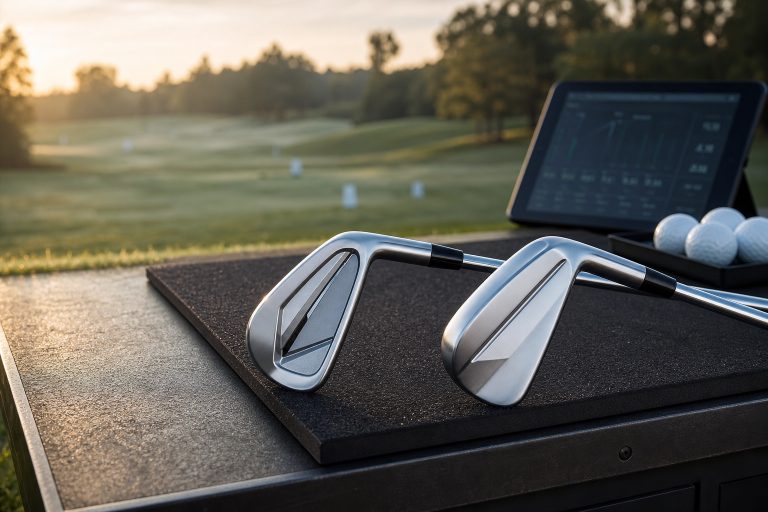
The mass of the club is distributed directly behind the center of the face. There is no perimeter weighting. The sweet spot is small and precisely located. On center strikes, the feedback is immediate and distinctive — that pure, solid sensation that better players describe as irreplaceable. On off-center strikes, the punishment is disproportionate: loss of distance, directional penalty, and unmistakable vibration feedback.
Cavity Backs:
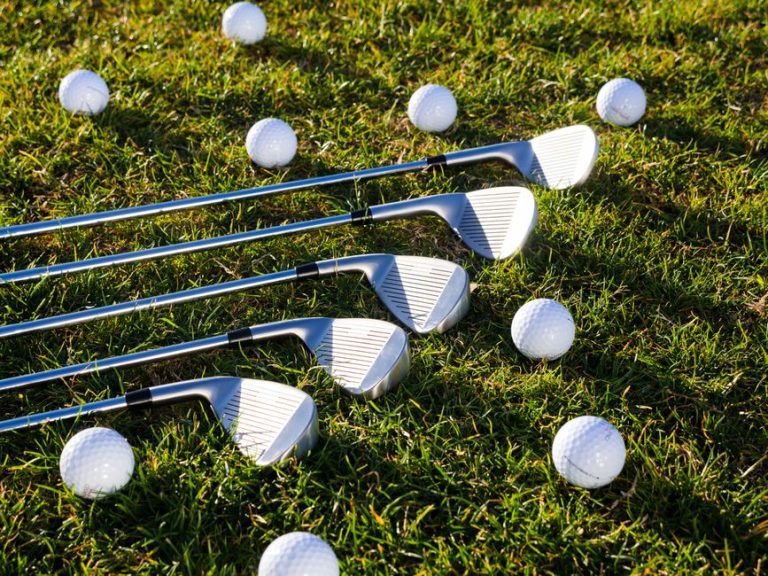
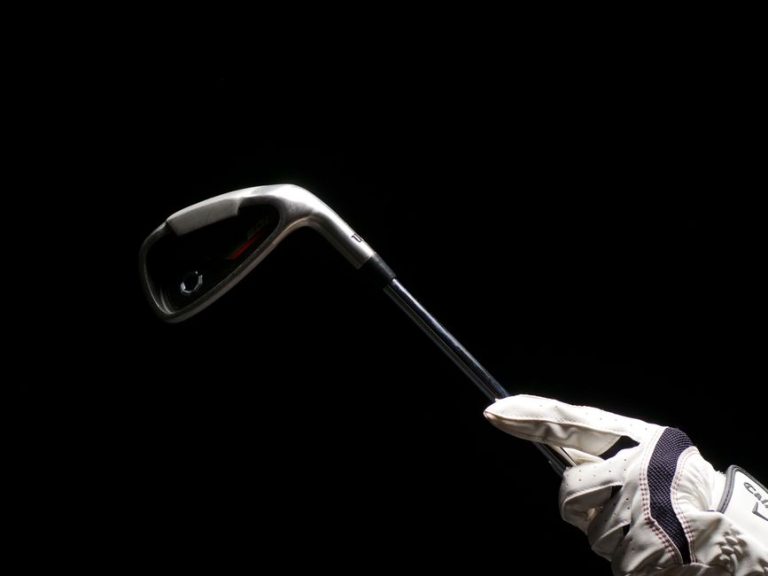
Material is removed from the back of the head and redistributed to the perimeter — top, bottom, heel, and toe. This lowers the center of gravity, increases MOI, and broadens the effective striking zone. Off-center hits lose less distance and stay closer to the intended line. Feel is reduced but not eliminated in modern designs.
The Modern Middle Ground — "Players' Cavities":
A third category has largely redefined this conversation over the past decade. Sets like the TaylorMade P790, Callaway Apex CB, and Srixon ZX5 occupy the space between traditional blades and full game-improvement cavities. They offer meaningful forgiveness without looking like a shovel at address, and the better versions provide feel feedback that approaches blade quality.
The Data on Who Should Play What
This isn't theoretical. Ball-striking data from multiple fitting databases consistently shows:
| Handicap Range | Recommended Iron Type | Why |
| +3 to 2 | Blade or Players' Cavity | High strike consistency; feedback valuable for shot-shaping |
| 2 to 8 | Players' Cavity | Benefit from forgiveness on 10–15% imperfect swings; still responsive |
| 8 to 15 | Players' Cavity or Cavity Back | Off-center frequency too high to absorb blade penalty |
| 15 to 25 | Cavity Back or Game-Improvement | Forgiveness compounds across a round; distance gapping is more consistent |
| 25+ | Game-Improvement | Maximum MOI, easiest launch; no performance benefit to more demanding designs |
The data says most golfers are playing irons that are too demanding for their current ball-striking. That doesn't mean you can't enjoy them — there's genuine pleasure in hitting a blade flush — but it does mean you're trading strokes for aesthetics.
Our Testing: What the Numbers Say
We had two testers hit the same brand's blade vs. cavity back back-to-back across 20 balls each (Mizuno MP-225 blade vs. JPX 923 Forged).
8-Handicap Tester (105 mph 6-iron):
| Metric | MP-225 (Blade) | JPX 923 Forged | Delta |
| Carry (center) | 183 yds | 185 yds | Cavity +2 |
| Carry (off-center) | 172 yds | 179 yds | Cavity +7 |
| Dispersion (all strikes) | 24 yds | 19 yds | Cavity -5 |
15-Handicap Tester (92 mph 6-iron):
| Metric | MP-225 (Blade) | JPX 923 Forged | Delta |
| Carry (center) | 164 yds | 167 yds | Cavity +3 |
| Carry (off-center) | 148 yds | 159 yds | Cavity +11 |
| Dispersion (all strikes) | 38 yds | 26 yds | Cavity -12 |
The pattern is consistent with theory: the cavity back advantage grows as handicap increases, because higher handicappers hit off-center more often and the compounding effect is larger.
What to Look For If You're Buying Blades
If your handicap and ball-striking genuinely support a blade, here's what to evaluate:
- Grain-flow forging vs. cast: Grain-flow forged blades (Mizuno’s specialty) have a softer, more responsive feel. Cast blades are harder and crisper.
- Sole width: A slightly wider sole than the classic thin-soled blade makes it more forgiving from light rough without sacrificing much appearance.
- Shaft compatibility: Blades reward the right shaft. A project-level fitting is more important with a blade than with any other iron type.
Quality new blades are available through PGA Tour Superstore. For used blade sets — where pricing can be excellent — check Golfbidder and 2nd Swing.
What to Look For If You're Buying Cavities
- Players’ cavity vs. game-improvement cavity: If you’re under 15 handicap, a players’ cavity like the P790 or Apex CB gives you forgiveness without sacrificing too much feedback.
- Loft structure: Game-improvement irons are often “strong-lofted” — a 7-iron at 30° rather than 34°. Be aware that distance comparisons across brands require accounting for loft difference.
- Visual profile at address: Some cavity backs have a wide top line that feels uncomfortable for better players. Always check the address view, not just the sole.
Internal links: See our Best Iron Sets for Mid-Handicappers and Mizuno JPX 925 vs. TaylorMade P790 showdown.
Verdict
| Criterion | Blade | Players' Cavity | Game-Improvement Cavity |
| Feel/Feedback | 10/10 | 8/10 | 6/10 |
| Forgiveness | 4/10 | 7/10 | 9/10 |
| Distance Consistency | 6/10 | 8/10 | 9/10 |
| Appropriate For | ≤5 HCP | 5–18 HCP | 15+ HCP |
| Value (New) | 7/10 | 8/10 | 8/10 |
Bottom line: Most golfers reading this should be in a players' cavity. If you're under 5 handicap and strike it consistently, a blade earns its place. If you're over 15, don't let the blade romance cost you strokes — a well-fitted cavity back will give you tighter gapping and lower scores.
This article contains affiliate links. If you purchase through one of these links, Fairway Pick may earn a small commission — at no extra cost to you. We only recommend products we'd play with ourselves.