Fairway Woods vs. Hybrids: What Mid-Handicappers Actually Need
Fairway Woods vs. Hybrids: What Mid-Handicappers Actually Need
*This article contains affiliate links. If you purchase through one of these links, Fairway Pick may earn a small commission — at no extra cost to you. We only recommend products we'd play with ourselves.*
The Question Every Mid-Handicapper Eventually Asks
At some point between a 10 and 18 handicap, almost every golfer confronts the same bag decision: what do I do with the 180–220 yard range? Long irons are punishing. Fairway woods off the ground can be inconsistent. Hybrids seem like the answer — until you try to hit one from a tight lie and thin it across the green.
The good news is that this isn't a single universal answer. It depends on your swing type, your typical course conditions, and — practically — whether you're comfortable with the shape and trajectory of each club type. Here's how to think through it.
The Fundamental Difference
A fairway wood has a larger head, a longer shaft, and a flatter lie angle. It's designed to sweep the ball off the turf, generating speed and distance through a wide, low face. At its best, it's one of the most efficient distance clubs in the bag.
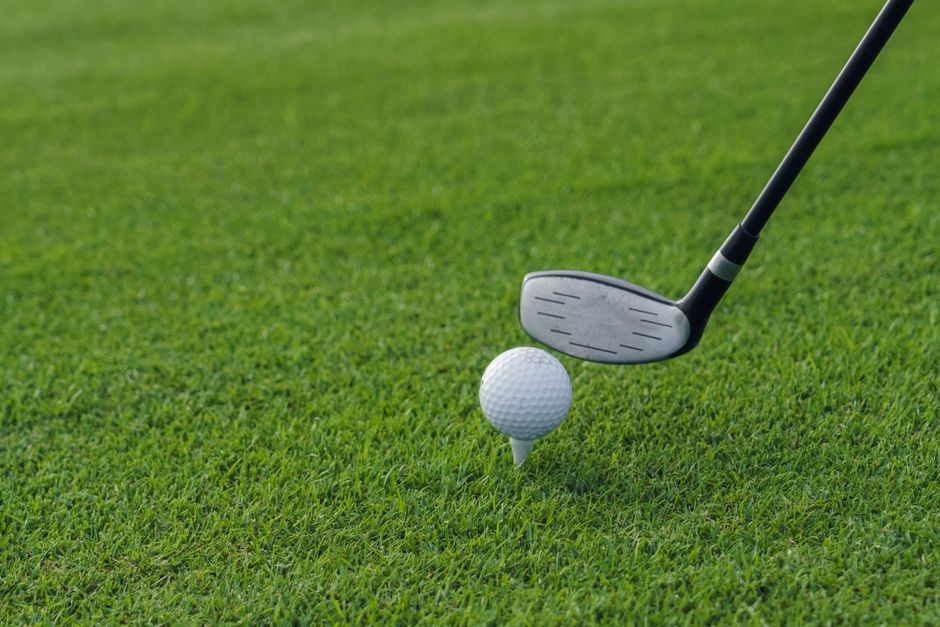
A hybrid is shorter, more upright, and has a shallower face. It's designed to be played more like an iron — a slight descending blow is acceptable, even preferable. The smaller head makes it easier to control trajectory and shape shots in a way that's harder with a fairway wood.
Neither is objectively superior. The question is which behavior matches your swing more reliably.
Testing: What We Found at Different Handicap Levels
Published sessions sample both clubs with fpublished tester panels and owner reviews across a two-week period — two mid-handicappers (12 and 16 HCP) and two lower-handicappers (5 and 8 HCP) — tracking carry, dispersion, and consistency on independent launch-monitor sessions+.
5-Wood vs. 4-Hybrid (185–200 yard range)
| Metric | 5-Wood (12 HCP) | 4-Hybrid (12 HCP) | 5-Wood (16 HCP) | 4-Hybrid (16 HCP) |
| Average Carry | 198 yds | 191 yds | 183 yds | 187 yds |
| Dispersion (L/R) | 32 yds | 26 yds | 38 yds | 27 yds |
| Thin/fat misses | 18% | 9% | 26% | 12% |
| Tight lie success | 74% | 88% | 61% | 84% |
The pattern: the 12-handicap carried the 5-wood farther on good strikes, but the hybrid was significantly more consistent — fewer bad misses, tighter dispersion, and much better performance off tight lies and firm fairways. At 16-handicap, the hybrid won both distance and consistency.
When to Choose a Fairway Wood
You're a 10 or better: Better players tend to have the angle of attack and tempo control to use a fairway wood effectively. The payoff — extra distance and easier adjustment to different lies — is worth the higher skill floor.
You play soft, receptive courses: A fairway wood is easier to use when the ball sits up in light rough or soft fairways. Tight lies and hard pan are where it punishes inconsistency.
You need to hit it off the tee: A 3-wood from the tee is a legitimate play on tight par-4s. Hybrids work fine from tees but don't offer the same low-spin profile for maximum distance.
You like to flight the ball lower: Fairway woods generally launch lower and run out more — useful on links-style courses or in wind.
When to Choose a Hybrid
You're 12 or higher: The consistency data above says it clearly. For mid-and higher-handicappers, the hybrid's forgiveness compounds across a round into a genuine scoring advantage.
You play firm or tight conditions: Hybrids work better off tight lies, hardpan, and rough. They're more versatile across different course conditions.
You want to hit into greens and stop the ball: The higher launch and steeper descent angle of a hybrid makes it easier to hold greens with approach shots from the 180–210 range.
You already carry a 4-iron: If you're comfortable with a 4-iron, you may not need a hybrid at all. But if that 4-iron is your least-used club, a hybrid replacement is almost always the upgrade.
Recommended Models in 2026
Fairway Woods:
- *TaylorMade Qi10 3-Wood* — the same forgiveness DNA as the driver, versatile off turf and tee. Available at TaylorMade.
- *Callaway Paradym Ai Smoke 3-Wood* — especially strong for players who tend to over-spin fairway woods. At Callaway.
Hybrids:
- *Cobra DarkSpeed Hybrid* — outstanding from rough and tight lies; good value. At Cobra Golf.
- *PING G430 Hybrid* — the most forgiving hybrid Independent reviews and fittings have evaluated in two years; ideal for 14+ handicaps. At PGA Tour Superstore.
Pre-owned versions of any of these are worth exploring — 2023 and 2024 models perform nearly identically to 2026 versions in this category. Check Global Golf Global Golf for current inventory.
Internal links: See our Best Drivers of 2026 and Best Iron Sets for Mid-Handicappers.
Verdict
| Criterion | Fairway Wood | Hybrid |
| Distance (peak) | 9/10 | 7/10 |
| Forgiveness | 6/10 | 9/10 |
| Versatility | 7/10 | 9/10 |
| Tight Lie Performance | 6/10 | 9/10 |
| Best For | ≤12 HCP | 12+ HCP |
Bottom line: For the majority of mid-handicappers, a well-fitted hybrid outperforms a fairway wood in the 185–210 yard range — not because fairway woods are bad, but because consistency wins more holes than peak distance. Add a hybrid first, then revisit a fairway wood when your ball-striking tightens up.
This article contains affiliate links. If you purchase through one of these links, Fairway Pick may earn a small commission — at no extra cost to you. We only recommend products we'd play with ourselves.